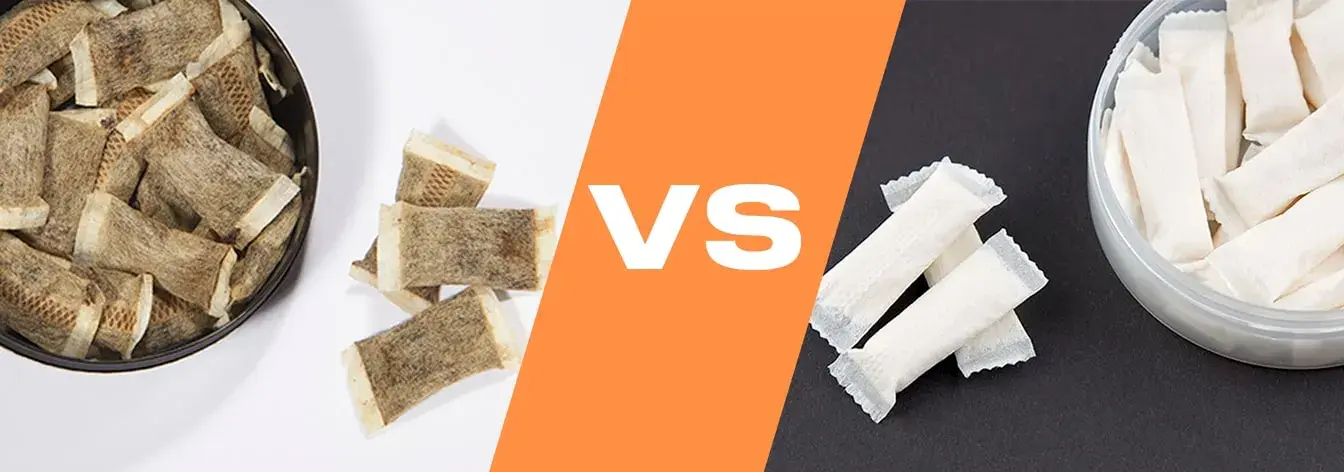
The main difference between nicotine pouches and snus is that snus contains tobacco while nicotine pouches are tobacco-free. Snus uses pasteurized ground tobacco leaves as its base, while nicotine pouches use plant fibers infused with extracted or synthetic nicotine. This distinction affects legality, health risks, flavor profiles, and where you can buy them.
What is snus
Snus is a traditional Swedish tobacco product that originated in the 18th century. It consists of ground tobacco mixed with water, salt, and flavorings, then pasteurized rather than fermented. You place it between your upper lip and gum, where nicotine absorbs through the oral mucosa. Snus comes in loose form or portioned pouches and has a distinct tobacco taste that many users describe as earthy and robust.
Sweden has the lowest smoking rate in Europe, largely attributed to snus being a popular alternative to cigarettes. Swedish Match, the company behind General Snus, helped establish the category. The pasteurization process significantly reduces tobacco-specific nitrosamines compared to American dip and chewing tobacco, making Swedish snus notably different from other smokeless tobacco products.
What are nicotine pouches
Nicotine pouches are a modern alternative that appeared in the early 2000s. They contain nicotine extracted from tobacco plants or synthesized in a lab, combined with plant-based fibers, flavorings, and pH adjusters. The nicotine is there, but the tobacco leaf is not. Brands like ZYN, VELO, and On! dominate this category.
The tobacco-free formulation means nicotine pouches don't contain tobacco-specific nitrosamines or other compounds found in tobacco leaf. They come in white pouches that don't stain teeth and are available in a much wider range of flavors than traditional snus.
Key differences explained
Tobacco content is the fundamental distinction. Snus contains tobacco. Nicotine pouches do not. This single difference creates a cascade of other distinctions in how the products are regulated, perceived, and experienced.
Legality varies significantly. Snus is banned in all EU countries except Sweden, where it originated. It's also banned in the UK, Australia, and New Zealand. Nicotine pouches face no such restrictions because they don't contain tobacco leaf. You can buy nicotine pouches legally throughout Europe, the UK, and most other markets. In the US, both products are legal, but only ZYN has received FDA marketing authorization as of January 2025.
Health implications differ as well. Both products avoid the major harms of smoking because there's no combustion or inhalation. However, snus still contains tobacco, which carries some level of cancer risk, though significantly lower than cigarettes. Research places nicotine pouches closer to nicotine replacement therapy products like patches and gum on the toxicant continuum. Neither is risk-free, but both are substantially less harmful than smoking.
Flavor profiles are noticeably different. Snus has an inherent tobacco taste that comes through even in flavored varieties. The earthy, rich tobacco flavor is either appealing or off-putting depending on your preferences. Nicotine pouches have no tobacco taste at all, which allows for cleaner flavor profiles. Mint, fruit, citrus, and other flavors come through without tobacco undertones.
Nicotine delivery and strength
Snus typically delivers nicotine more slowly and steadily than many nicotine pouches. Standard snus products range from 8-14mg per gram, with some extreme options reaching 40mg or higher. The nicotine release is gradual and sustained, often lasting 30-60 minutes or longer. Swedish Match General Snus, one of the most popular brands, has received FDA modified-risk tobacco product status, acknowledging its reduced harm compared to cigarettes.
Nicotine pouches vary more widely in their release profiles. Moist pouches activate quickly and deliver nicotine faster. Dry pouches like ZYN release more slowly. Strengths range from 2mg to 50mg per pouch across different brands, though mainstream options like ZYN and VELO stay in the 3-8mg range in the US. Higher strength pouches are more common in European markets where brands like Pablo, Siberia, and Killa cater to users with high tolerance.
The absorption efficiency can differ too. Snus generally has lower pH than nicotine pouches, resulting in slower but longer-lasting nicotine absorption. Nicotine pouches often have higher pH to speed up absorption, which is partly why they can feel stronger despite sometimes having lower nicotine content on paper. A 6mg nicotine pouch may feel comparable to 10-12mg snus because of these formulation differences.
Shelf life and storage
Snus requires refrigeration for optimal freshness and has a shorter shelf life than nicotine pouches. The tobacco content means it can spoil or degrade more quickly. Swedish snus is typically dated for consumption within a few months and should be stored in the fridge.
Nicotine pouches last much longer and don't require refrigeration. Most products have a 12-month shelf life from manufacturing and can be stored at room temperature. The absence of tobacco makes them more shelf-stable. This convenience factor is one reason nicotine pouches have gained popularity over snus outside Scandinavia.
Teeth staining and discretion
Snus can stain teeth over time, particularly original or brown portion varieties. The tobacco content leaves residue that discolors enamel with regular use. White portion snus reduces this issue but doesn't eliminate it entirely. Users who care about dental appearance often need to invest more in whitening products or dental care.
Nicotine pouches are completely white and don't stain teeth when used as directed. This makes them more appealing to users concerned about dental appearance. The white pouches are also more discreet because they don't leave visible residue on lips or gums. For workplace or social use where appearance matters, nicotine pouches have a clear advantage.
The discretion factor extends beyond teeth. Snus has a noticeable tobacco odor that can transfer to your breath and hands. Nicotine pouches smell like their flavoring only, which is usually pleasant or neutral. In professional environments or social situations where tobacco smell would be inappropriate, pouches offer better concealment.
Which one should you choose
Choose snus if you appreciate tobacco flavor, live where it's legal (Sweden, Norway, Switzerland, or the US), and prefer a traditional product with decades of epidemiological safety data. Snus appeals to users who want that earthy, robust tobacco experience without smoking.
Choose nicotine pouches if you want tobacco-free nicotine, need a product available in most countries, prefer diverse flavor options without tobacco undertones, or care about avoiding teeth staining. Nicotine pouches suit users who want modern convenience and a cleaner experience.
Can you switch between snus and pouches
Many users switch based on situation or preference. Some use snus at home where they can refrigerate it and pouches when traveling or at work. Others transition from snus to pouches over time as they appreciate the convenience and flavor variety.
If you're currently using snus and considering pouches, expect an adjustment period. The faster nicotine delivery from high-pH pouches feels different from snus's gradual release. You may need to try a few brands to find one that satisfies in a similar way. Starting with tobacco-flavored options like VELO Smooth or ZYN Smooth can ease the transition if you prefer that profile.
Going from pouches to snus requires access and a taste for tobacco. If you've never used snus, the flavor can be surprising. It's earthier and more robust than any nicotine pouch. Some people love it immediately while others never develop a taste for it.
Comparing reviews and ratings on pouchdb.net can help you understand the differences in user experience between snus and various nicotine pouch brands. Many former snus users share their perspectives on how pouches compare.
The bottom line
Snus contains tobacco while nicotine pouches are tobacco-free. Snus is banned in most countries outside Sweden, Norway, Switzerland, and the US. Nicotine pouches are legal nearly everywhere. Both avoid the harms of smoking. Snus has a distinct tobacco taste and may stain teeth. Nicotine pouches come in clean flavors with no staining. Snus requires refrigeration while pouches are shelf-stable for up to a year. Choose based on your flavor preferences, location, and whether tobacco content matters to you.